
Battery Storage Without Solar Panels: Is It Worth It?
Not every house suits solar panels. Some roofs face the wrong way, some are shaded by trees or the house next door, and some people just don’t fancy panels on the front of their house.
So a question I’m hearing more and more around Rotherham is: “Can I just have the battery?”
The short answer is yes. Whether it’s worth it for you is a different question, and I’d rather give you an honest answer than sell you something that takes forever to pay for itself.
I’m Mat from MP Electrical, an electrician for over 25 years, and here’s how it really works.
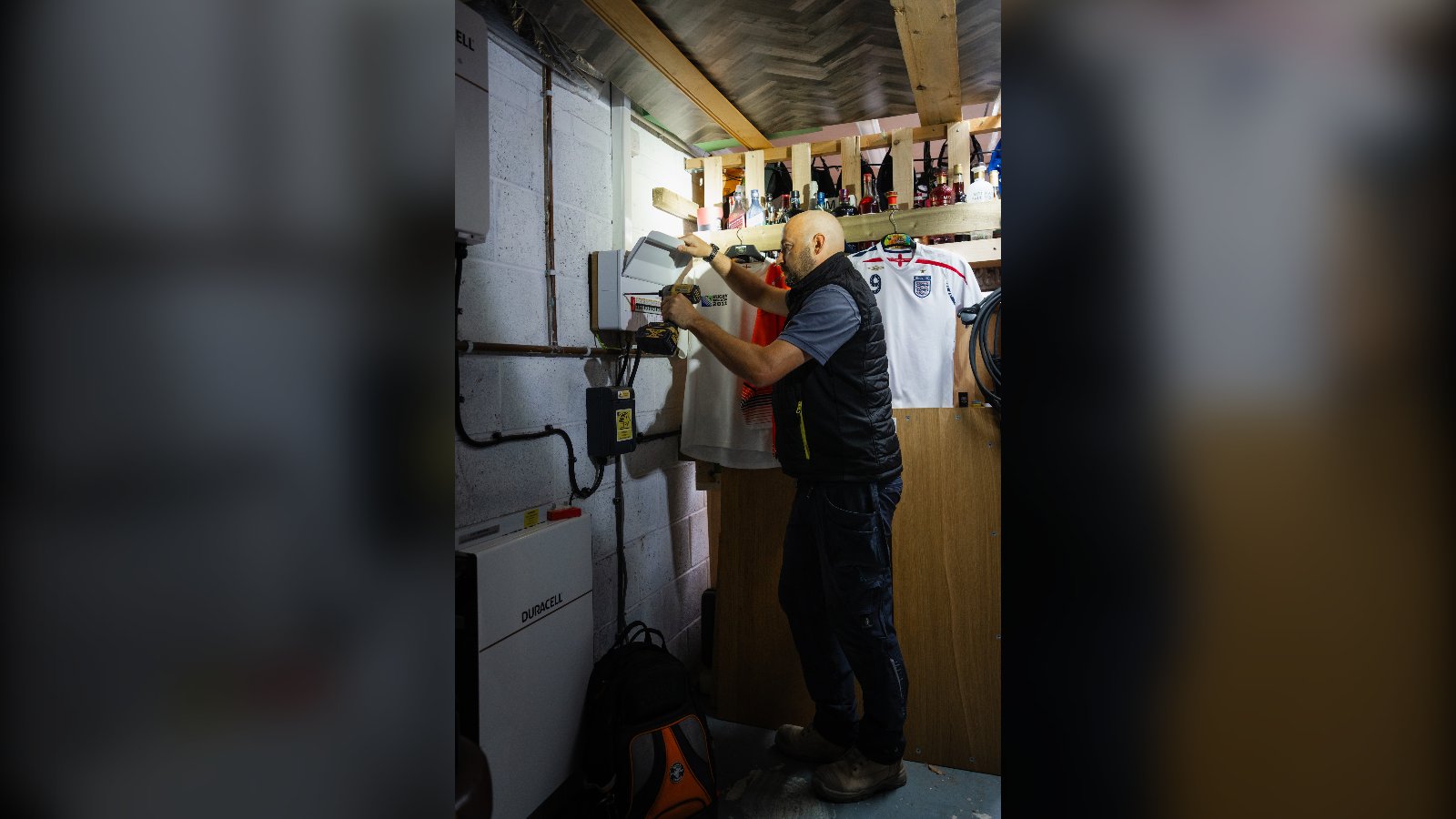
Quick answer
A home battery without solar charges up from the grid overnight when electricity is cheap, then powers your house during the day and evening when electricity is dearer. It can save money if you’re on a tariff with a big gap between the cheap and expensive rates and you use a fair amount of electricity. For low users, the savings can be small compared with the cost.
How does a battery work without solar panels?
With solar, the battery fills up with the free electricity your panels make during the day. Without solar, it fills up from the grid instead.
The trick is timing. Lots of energy suppliers now offer time of use tariffs, where electricity is much cheaper for a few hours overnight. The battery charges in that cheap window, then your house runs off the battery when the price goes back up.
Your fridge, telly, kettle and lights don’t know any different. You’re still using electricity as normal, you’re just paying the night rate for more of it.
A simple example
Let’s keep the numbers round and make it obvious these are just to show how it works, not a quote:
- Say your night rate is 7p per unit and your day rate is 27p per unit.
- Your battery stores 10 units overnight and you use them during the day.
- That’s 10 units at 7p instead of 27p, so a saving of 20p a unit, or about £2 a day.
Over a year that adds up. But remember:
- Batteries lose a little energy charging and discharging, so you don’t get back every unit you put in.
- You won’t always use the full battery every day.
- Tariff prices change, and so does your usage.
That’s why any honest quote should be based on your actual usage and your actual tariff, not a brochure figure.
Who does battery storage without solar suit?
From what I see around Rotherham, Wickersley, Bramley and Maltby, a standalone battery makes most sense if:
- You use a lot of electricity during the day or evening. Families, people working from home, electric cooking.
- You’ve got an electric car. EV tariffs often come with cheap overnight rates for the whole house, which makes a battery work harder.
- You’ve got a heat pump or electric heating. Bigger demand means more units to shift to the cheap rate.
- Your roof won’t take solar, or you’re in a conservation area or flat where panels aren’t an option.
- You might add solar later. A battery fitted now can usually work with panels in future, as long as the system is chosen with that in mind.
It suits people less if:
- You’re a low user and already out most of the day.
- You’re on a standard flat rate tariff and don’t want to switch.
- You’re planning to move house soon.
Some comparison sites are blunt about it and say a battery on its own rarely pays back. I wouldn’t go that far for every house, but I agree it isn’t a no brainer. Do the sums first.
What about backup in a power cut?
This surprises people. A lot of home batteries don’t power your house in a power cut unless they’re set up for it.
For safety, a grid connected system shuts down when the grid goes off. Some systems offer backup or “EPS” (emergency power supply) features, but that usually needs extra equipment and wiring, and may only cover certain circuits.
If backup during a power cut matters to you, tell your installer at the start. It changes what gets fitted. I’ve covered this in more detail in do solar panels still work in a power cut, and the same logic applies to batteries.
Is there VAT on battery storage?
Right now, no. Since 1 February 2024, home batteries have been zero rated for VAT, including standalone batteries fitted without solar panels.
That 0% rate is due to end on 31 March 2027, after which it’s due to go up to 5%. So if you’re seriously thinking about a battery, it’s worth getting quotes in good time rather than leaving it to the last few weeks when every installer is booked up.
There’s no general government grant for a standalone battery. If someone cold calls you about a “free battery grant”, be very careful.
Where can a home battery go?
This is where things have changed, and it’s something I take seriously.
Lithium batteries store a lot of energy in a small box. They’re very safe when installed properly, but if one does fail, it can burn fiercely. Because of that, there are now clear rules on where they can and can’t be installed.
The British Standard PAS 63100:2024 set out fire safety requirements for batteries in homes. The latest wiring regulations, BS 7671 Amendment 4, now include a whole new chapter on battery systems, in line with that standard. Since 15 October 2026, when the previous edition was withdrawn, new battery installations are designed to the new rules.
In plain English, installers shouldn’t put a home battery:
- In the loft or roof space
- On escape routes, like landings, stairs and hallways
- In bedrooms, or cupboards that open into rooms where people sleep
- In cellars or basements without direct access to outside
- Outside within 1 metre of doors, windows or vents
Good places tend to be:
- A garage
- A ground floor utility room
- A suitable outside wall, in a proper enclosure
Where a battery goes indoors, the standard also expects a mains powered smoke alarm in that area.
So if an installer is happy to stick a battery in your loft “because it’s out of the way”, that’s a big warning sign.
Does the network operator need to know?
Yes. Home batteries are one of the energy devices that need to be registered with your local network operator. Around Rotherham and South Yorkshire that’s Northern Powergrid. Your installer should handle that and tell you what’s been submitted.
What does an installation involve?
When I fit a battery, the job usually includes:
- Checking your main fuse, fuseboard and earthing
- Agreeing a safe location (see above)
- Fitting the battery and inverter
- Running cables back to the fuseboard with suitable protection
- Isolator switches so the system can be safely shut down
- Setting up the app and charging schedule to match your tariff
- Testing, certification and network operator notification
If your fuseboard is old, it may need upgrading first. My guide to fuseboard upgrades in Rotherham explains why.
Questions to ask any battery installer
- What size battery do you recommend, and why that size for my usage?
- Where will it go, and does that location meet PAS 63100 and the current wiring regulations?
- Will it work if I add solar later?
- Does it give backup in a power cut? If so, which circuits?
- Who handles network operator notification?
- What’s the warranty on the battery, and what happens if it fails?
- How have you worked out my savings?
If they can’t answer those clearly, keep looking.
Frequently asked questions
Can I have a home battery without solar panels?
Yes. It charges from the grid during cheap overnight hours and powers your home when electricity is more expensive.
How long does a standalone battery take to pay for itself?
It depends on the battery cost, your tariff and how much electricity you use. For high users on a good time of use tariff it can be reasonable. For low users it can take a very long time. Ask for savings based on your own bills.
Can a battery go in the loft?
Under the current fire safety standard and wiring regulations, installers shouldn’t fit home batteries in lofts or roof spaces.
Will a battery keep my lights on in a power cut?
Not unless it’s specifically set up for backup. Many systems shut down when the grid goes off.
Is there VAT on home batteries?
Home batteries are currently zero rated for VAT, including standalone batteries. That’s due to end on 31 March 2027.
Thinking about battery storage?
If you want an honest view on whether a battery suits your house, I’m happy to look at your bills and your setup with you. Have a look at our solar and battery storage page and my guide to home battery storage rules.
Contact MP Electrical
If you need help with any electrical work in Rotherham or South Yorkshire, MP Electrical are happy to help.
📞 Call our office on 01709 645115
🌐 Visit: https://www.rotherhamelectrician.co.uk
We’re a trusted local electrician with over 350 five star Google reviews, and I’ll give you straight advice, even if that means telling you a battery isn’t right for you yet. Quotations come with no pressure, booking online is easy, and you’ll get text and email confirmations so you know exactly when we’re coming.
Written by Mat at MP Electrical
NAPIT-registered electrician serving Rotherham & South Yorkshire. 350+ five-star reviews.
Last updated: 20 November 2026
You Might Also Like
What Size Main Fuse Do I Need for an EV Charger?
If you're thinking about getting an electric car, sooner or later someone will mention your...
20 Nov 2026Plug In Solar Panels: What Rotherham Homeowners Need to Know
Since plug in solar went on sale at the end of August, there's one question...
22 Sep 2026Do Solar Panels Still Work in a Power Cut?
Do Solar Panels Still Work in a Power Cut? Do Solar Panels Still Work in...
8 Apr 2026Most read on this site
The pages people open most often when they land here.
- Why do my electrics keep tripping?
- EV charger installation in Rotherham
- Fitting an EV charger with no driveway
- Why a cracked plug socket is worth sorting
- Can your home electrics handle an EV charger?
- What electrical work you can legally do yourself
- What happens during an EV charger installation
- CCTV installation in Rotherham
Need an Electrician in Rotherham?
NAPIT registered with five star Google reviews
For straightforward jobs we can often quote over the phone or from photos.
