
What Size Main Fuse Do I Need for an EV Charger?
If you’re thinking about getting an electric car, sooner or later someone will mention your main fuse. Maybe the car dealer said it, maybe a mate at work did, or maybe you read it online and now you’re stood in the hallway with a torch looking at a black box near your meter wondering what you’re supposed to be checking.
I’m Mat from MP Electrical. I’ve been an electrician for over 25 years and I fit EV chargers all over Rotherham and South Yorkshire. This is the question I get asked more than any other before a charger goes in, so here’s the honest answer.
Quick answer
A typical 7kW home EV charger pulls about 32 amps when it’s charging flat out. Most homes can take one, but whether yours can depends on the size of your main fuse, what else your house uses at the same time, and whether your supply is shared with next door.
- 100 amp main fuse: usually plenty of room for a 7kW charger.
- 80 amp main fuse: usually fine, especially with a charger that has load management built in.
- 60 amp main fuse: often still possible with load management, but your electrician will need to check carefully and may ask the network operator to look at an upgrade.
The decision isn’t made on the fuse size by itself. It’s made on a proper assessment of your house.
What is the main fuse, and who owns it?
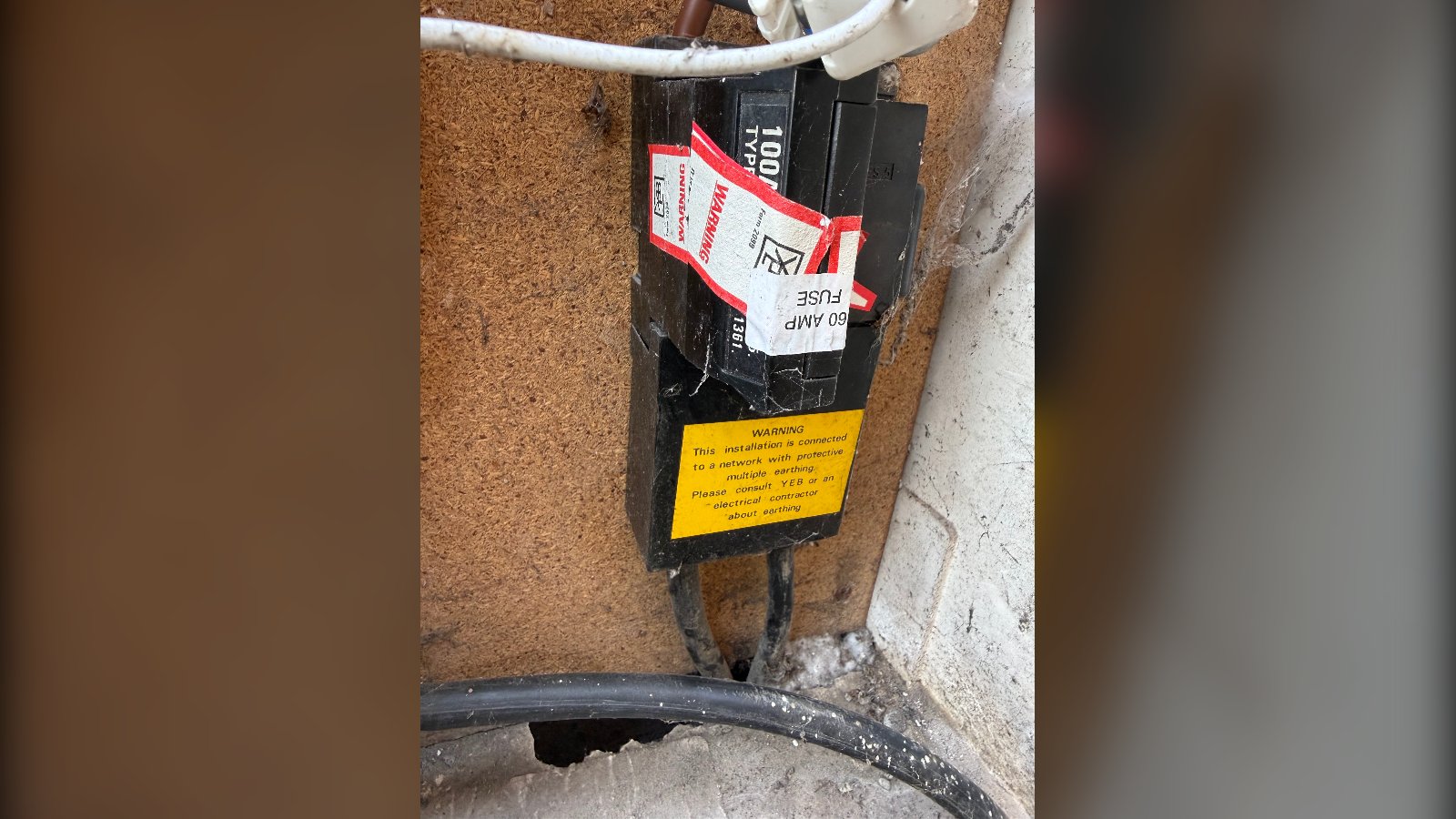
The main fuse (sometimes called the service fuse or cut out fuse) sits in a sealed box where the supply cable comes into your house, normally right next to your meter. It protects the cable coming in from the street.
Here’s the important bit. That fuse doesn’t belong to you, and it doesn’t belong to your energy supplier either. It belongs to your local network operator, the company that looks after the cables and substations. Around Rotherham, Wickersley, Maltby, Barnsley, Doncaster and Sheffield that’s Northern Powergrid.
So nobody other than the network operator, or someone working on their behalf, should be opening that box. If you see a cut out with a broken seal or someone offering to “just swap the fuse”, walk away.
How do I find out what size my main fuse is?
Have a look at the cut out (the box the incoming cable goes into). Often the rating is printed on the fuse carrier or on a label, something like 60A, 80A or 100A. On older boxes it can be faded, missing or hidden.
Don’t open anything. If you can’t see it, take a clear photo of the cut out, the meter and the cables between them. That photo is usually enough for me to tell you a lot before I even come out, and it’s exactly what the network operator asks for if we need to contact them.
Why 32 amps doesn’t mean you need a huge fuse
People sometimes do the maths and panic. “My fuse is 60 amps, the charger is 32, the electric shower is 40. That’s more than 60!”
In real life, everything in a house doesn’t run flat out at the same moment. Electricians work out what’s called maximum demand, which is a realistic figure for the most your house is likely to draw at once, using the rules in the wiring regulations (BS 7671) rather than just adding everything up.
That’s why a charger that “doesn’t fit” on paper often fits perfectly well once it’s assessed properly.
Load management: the clever bit
Most decent EV chargers now come with a small sensor, called a CT clamp, that clips around the main cable coming into your house. The charger watches how much power the house is using and backs off its charging rate if the total gets near your fuse limit.
So if you get home, put the oven on, the shower’s running and the car’s plugged in, the charger quietly slows down for a bit, then speeds back up when the house calms down. You don’t notice it, and your main fuse doesn’t get overloaded.
For a lot of homes in Rotherham with 60 or 80 amp fuses, load management is what makes a 7kW charger possible without any upgrade at all.
Do I need to tell the network operator?
Yes, and this part is the installer’s job, not yours. When an EV charger goes in, the installer has to tell the network operator using a standard form. There are two routes:
Connect and notify
If the house’s new maximum demand stays within the limits set out in the industry process (broadly up to 60 amps) and the other criteria are met, the installer can fit the charger and then notify the network operator within 28 days.
Apply to connect
If the numbers are higher, or something else doesn’t meet the criteria, the installer has to apply to the network operator before fitting the charger. The network operator then checks whether the supply can take it. The industry process says they’ll respond within ten working days once they’ve got all the information they need.
Either way, I handle the paperwork. You just need to know that if an installer tells you notification “isn’t needed”, that’s a red flag.
What is a looped supply?
This one catches a lot of people out, especially in older terraces and semis around Rotherham, Rawmarsh, Mexborough and Wath upon Dearne.
Years ago it was common to run one supply cable into one house and then “loop” it on to the house next door. Two homes sharing one connection was fine when all anyone had was a few lights and a kettle. It’s a different story when both houses want an EV charger, a heat pump or an electric shower.
Signs you might be looped:
- Your cut out has two cables going into it, or none at all because it’s fed from next door.
- Your neighbour’s meter box seems to have an extra cable heading your way.
- The network operator tells you when you ask.
It isn’t always obvious. Sometimes the only clue is in the house next door, not yours.
If you are on a looped supply, the network operator decides whether you can add a charger as it is, or whether the loop needs splitting so each house has its own cable. That decision is theirs to make, not mine, but I’ll get the information to them and keep you updated.
Getting a main fuse upgrade from Northern Powergrid
If your assessment shows you need more capacity, the usual fix is a fuse upgrade, for example from 60 amps to 80 or 100 amps. Sometimes that’s a quick swap. Sometimes the cut out or the cable from the street needs changing too.
What I’d tell any customer:
- The network operator decides. They look at your supply cable and cut out and tell you what’s possible.
- Costs vary. Whether there’s a charge depends on what work is involved. Don’t take a figure from a forum post as gospel, ask them for your property.
- Your meter tails may need upgrading. These are the thick cables between the meter and your fuseboard. They belong to you, not the network operator, and they need to be big enough for the new fuse.
- An isolator switch helps. A switch between the meter and the fuseboard lets an electrician isolate your house safely without needing the network operator to pull the main fuse.
If you’re on the fence about an EV but think you’ll get one in the next few years, it can be worth asking about the fuse now, before you’re waiting on a car being delivered.
What I check before fitting an EV charger
When I come out to look at a charger job, here’s what I’m actually looking at:
- The main fuse rating and the condition of the cut out
- Whether the supply looks looped
- Your meter tails and whether there’s an isolator
- Your fuseboard, and whether it has room and suitable protection for a new circuit
- The earthing arrangement, which is a big part of EV charger safety
- Your existing big loads, like electric showers, cookers, immersion heaters or a heat pump
- Where the charger will go and how the cable will get there
If your fuseboard is old or full, it may need upgrading as part of the job. You can read more in my guide to how much a fuseboard replacement costs.
What if you’re in a terraced house?
Main fuse size is only part of the puzzle if you don’t have a driveway. Cables can’t trail across a public pavement, so you’ve got other things to sort out too. I’ve written a separate guide on EV charging for terraced houses with no driveway, which covers the options.
And if you want the bigger picture, have a read of can my home electrics handle an EV charger.
Frequently asked questions
Can I fit an EV charger on a 60 amp fuse?
In a lot of homes, yes, with a load managed charger and a proper assessment. It depends on what else your house uses and whether the supply is looped. Your installer may need to apply to the network operator first.
Is a 100 amp fuse better for an EV charger?
It gives you more headroom, which helps if you also have an electric shower, a heat pump or you’re planning solar and a battery. It isn’t required for every charger installation.
Can my electrician change the main fuse?
No. The main fuse and cut out belong to the network operator. Your electrician can assess what’s needed and contact them for you, but the fuse change itself is done by the network operator.
Who do I contact about a fuse upgrade in Rotherham?
Northern Powergrid looks after the network in Rotherham and most of Yorkshire. If you’re having a charger fitted, it’s easier to let your installer contact them, because they’ll need the technical details anyway.
Will a bigger charger need a bigger fuse?
Faster home chargers (11kW and 22kW) usually need a three phase supply, which most houses don’t have. For a normal single phase home, 7kW is the sensible choice.
Thinking about an EV charger?
If you’re not sure what you’ve got, WhatsApp a photo of your meter and cut out to 07745 193699 and I’ll tell you honestly whether a charger looks straightforward. You can find out more about how we work on our EV charger installation page, or have a look at some of our recent work.
Contact MP Electrical
If you need help with any electrical work in Rotherham or South Yorkshire, MP Electrical are happy to help.
📞 Call our office on 01709 645115
🌐 Visit: https://www.rotherhamelectrician.co.uk
We’re a trusted local electrician with over 350 five star Google reviews. I’m happy to give helpful advice, even if you’re months away from getting the car. Quotations come with no pressure, booking online is easy, and you’ll get text and email confirmations so you know exactly when we’re coming.
Written by Mat at MP Electrical
NAPIT-registered electrician serving Rotherham & South Yorkshire. 350+ five-star reviews.
Last updated: 20 November 2026
You Might Also Like
Best Home EV Chargers to Install in 2026: Zappi, Ohme, Pod Point and Easee Compared
If you have bought an electric vehicle or you are about to, the next step...
14 Jul 2026EV Charger Installation Cost UK 2026
What Does an EV Charger Installation Actually Involve? Having a home EV charger installed means...
24 Aug 2026Tesla Wall Connector Installation: The Premium Home Charger | MP Electrical
What Is the Tesla Wall Connector? The Tesla Wall Connector is Tesla's own home charging...
3 Aug 2026Most read on this site
The pages people open most often when they land here.
- Why do my electrics keep tripping?
- EV charger installation in Rotherham
- Fitting an EV charger with no driveway
- Why a cracked plug socket is worth sorting
- Can your home electrics handle an EV charger?
- What electrical work you can legally do yourself
- What happens during an EV charger installation
- CCTV installation in Rotherham
Need an Electrician in Rotherham?
NAPIT registered with five star Google reviews
For straightforward jobs we can often quote over the phone or from photos.
