
Burning Smell From a Socket or Fuseboard: What To Do Right Now
A burning smell in the house is one of those things that makes your stomach drop. You sniff around the kitchen, check the toaster, check the oven, and then you realise it seems to be coming from a plug, a socket or the fuseboard under the stairs.
I’m Mat from MP Electrical. I’ve been an electrician for over 25 years, and I’d much rather someone rang me about a smell that turned out to be nothing than ignored one that wasn’t.
Here’s what to do, in the order you should do it.
Quick answer
If there’s smoke, flames or sparks, get everyone out and call 999. If there’s no fire, switch off and unplug whatever is nearby if it’s safe to touch, and if the smell is coming from the fuseboard, switch off the main switch if you can reach it safely. Then don’t use that socket or circuit again until an electrician has checked it.
Step 1: Is there smoke, fire or sparking?
If yes:
- Get everyone out of the house.
- Close doors behind you if you can do it on the way out.
- Call 999 from outside.
- Don’t throw water on anything electrical.
Nothing in the house is worth going back in for.
Step 2: Find where it’s coming from
If there’s no smoke or flames, try to narrow it down. Common culprits:
- A plug that’s warm, discoloured or melting
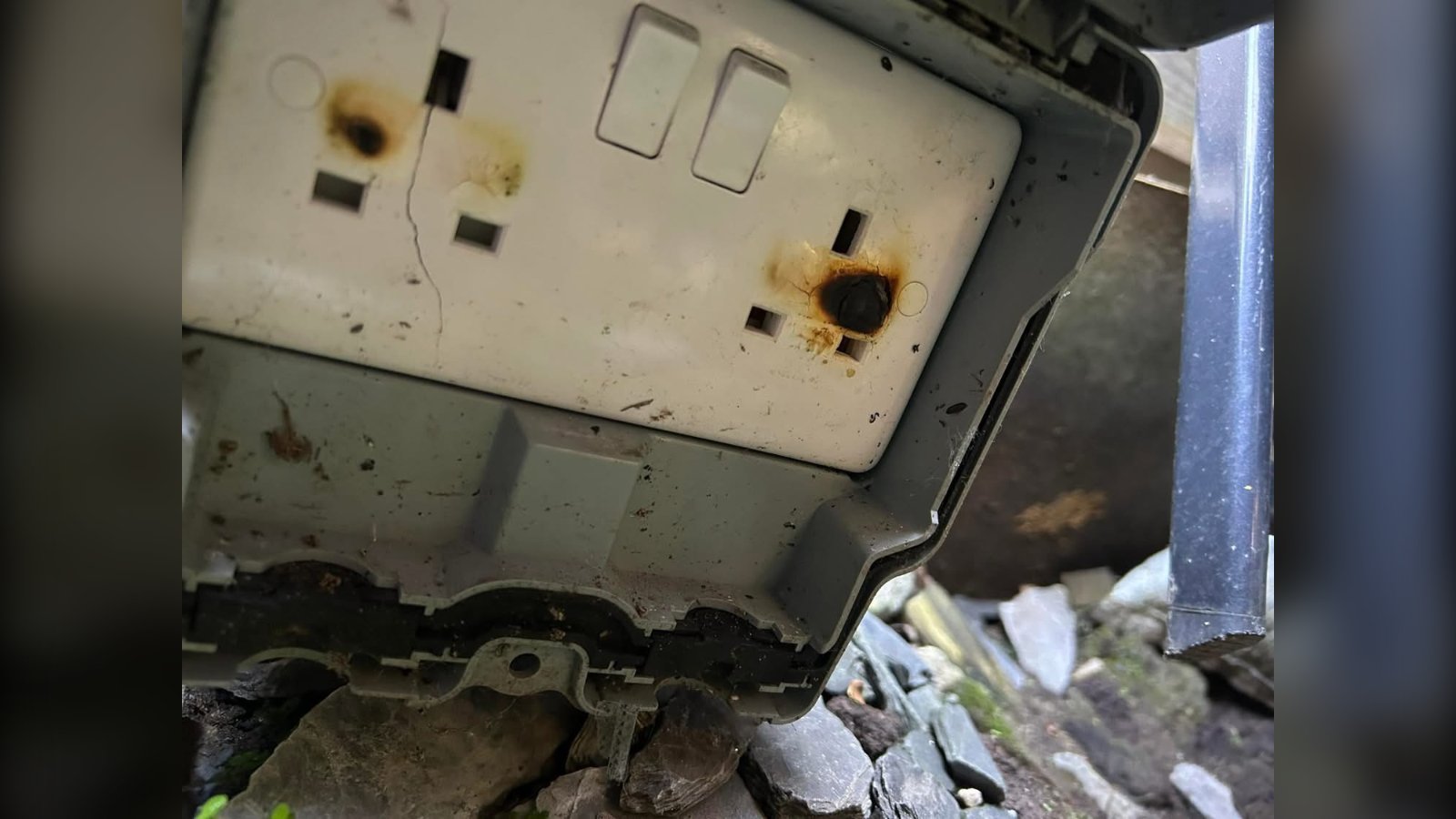
- A socket with brown or black marks around the holes
- An extension lead with too much plugged into it
- An appliance that’s been on a while, like a heater, tumble dryer or hair straighteners
- A light fitting or light switch
- The fuseboard itself
Electrical burning doesn’t always smell like smoke. It’s often more like hot plastic or burning rubber. Electrical Safety First also warns that a fishy smell from a socket can be a sign of parts overheating inside. A lot of people don’t know that one, so if you notice a strange fishy smell and there’s no fish anywhere near, take it seriously.
Step 3: Switch it off
If it’s a plug or appliance
If the plug isn’t hot to touch and there’s no visible damage, switch off at the socket and unplug it. Leave the appliance unplugged and don’t use it until it’s been checked.
If the plug or socket looks melted, scorched or feels hot, don’t grab it. Go to your fuseboard and switch off the circuit for that area, or the main switch if you’re not sure which is which.
If it’s the fuseboard
If the smell is coming from the fuseboard and there’s no smoke, flames or crackling:
- Switch off the main switch if you can reach it safely.
- If the board feels hot, is smoking or you can hear crackling or buzzing, don’t touch it. Get out and call 999.
Once the power is off, call an electrician. A burning smell from a fuseboard is an emergency callout in my book, not something to keep an eye on.
Step 4: Don’t switch it back on to “test it”
It’s natural to want to see if it happens again. Please don’t.
A burning smell usually means something got hot enough to damage plastic. The connection or part that caused it is still there, and putting power back through it can make it worse. Leave it off until someone’s checked it properly.
What causes a burning smell from a socket?
From a professional point of view, these are the usual suspects:
Loose connections
The screws holding the wires in a socket or plug can work loose over time, especially on sockets that get a lot of use or have been knocked. A loose connection creates resistance, and resistance creates heat. That heat can scorch the plastic and eventually start a fire.
Overloading
One socket, one plug is the advice from fire services for heavy appliances. Washing machines, tumble dryers, kettles and heaters pull a lot of current. Put two or three of them on an adaptor or extension lead and the plug, lead or socket can overheat.
In winter, plug in heaters on extension leads are a real worry.
Worn or cheap sockets and plugs
Sockets wear out. The contacts that grip the plug pins lose their spring, the plug doesn’t sit tight, and it heats up. Cheap or counterfeit plugs and chargers are another risk.
If you’ve got a cracked socket as well, have a read of why you shouldn’t ignore a cracked plug socket.
A faulty appliance
Sometimes the smell is the appliance, not the wiring. Motors, heating elements and power supplies can fail and overheat.
Damaged cables
A cable crushed behind furniture, pinched under a carpet gripper or nicked by a nail or screw can arc and overheat.
What causes a burning smell from a fuseboard?
A smell from the fuseboard is more worrying because it suggests a problem at the heart of your electrics. Typical causes:
- Loose connections on the main switch, a breaker or the neutral bar
- An overloaded circuit, where a cable is carrying more than it should
- A failing breaker or RCD
- Old boards, particularly older plastic boards and rewireable fuse boxes, which are more vulnerable to heat damage
Modern consumer units for homes are made of metal, which is designed to contain a fire if one starts inside. That’s one reason we upgrade old plastic boards rather than patch them up. I also fit a small fire suppression device inside every consumer unit we install as standard. It acts like a mini fire extinguisher inside the board.
You can read more about what a new board involves in my guide to fuseboard upgrades in Rotherham.
What I do when I come out
When I’m called to a burning smell, I’ll:
- Make the area safe and isolate the affected circuit
- Find the source, which isn’t always where the smell seemed strongest
- Open up the socket, switch, light or board and check the connections
- Look for heat damage to the cables as well as the accessory
- Replace damaged parts with good quality ones
- Test the circuit before putting it back into use
If I find signs that the problem is more widespread, like several scorched sockets or a board that’s clearly struggling, I’ll tell you honestly and explain your options. Sometimes it’s a quick fix. Sometimes it’s a sign that the electrics need a bigger look, such as an EICR.
How to reduce the risk
- Don’t overload sockets or extension leads, especially with heaters.
- Plug big appliances straight into the wall, not into adaptors.
- Replace plugs and sockets that are cracked, loose or discoloured.
- Don’t run cables under rugs or carpets.
- Check heaters, chargers and electric blankets for damage.
- Make sure you’ve got working smoke alarms. Our smoke alarm page explains the options.
- Consider an AFDD (arc fault detection device) in your fuseboard. They’re designed to spot the kind of arcing that causes these fires. I explain them in my RCD, RCBO and AFDD guide.
Frequently asked questions
Is a burning smell from a socket an emergency?
If there’s smoke, fire or sparks, call 999. If not, switch off and unplug, stop using it, and get an electrician to check it as soon as possible. Don’t leave it.
What does an electrical burning smell smell like?
Usually hot plastic or burning rubber. A fishy smell can also be a sign of overheating parts.
Can a burning smell go away on its own?
The smell can fade, but the cause usually doesn’t. Loose connections and overheating tend to get worse, not better.
Should I turn off the electric if I smell burning?
If you can do it safely and there’s no fire, yes. Switch off the circuit or the main switch at the fuseboard and leave it off until it’s been checked.
Need help now?
If you’ve got a burning smell in your home in Rotherham, Sheffield, Barnsley, Doncaster or anywhere in South Yorkshire, give us a call. You can find out more on our emergency electrician page and our fault finding page.
Contact MP Electrical
If you need help with any electrical work in Rotherham or South Yorkshire, MP Electrical are happy to help.
📞 Call our office on 01709 645115
🌐 Visit: https://www.rotherhamelectrician.co.uk
We’re a trusted local electrician with over 350 five star Google reviews, and I’m happy to give helpful advice over the phone if you’re not sure whether it’s urgent. Quotations come with no pressure, booking online is easy, and you’ll get text and email confirmations so you know exactly when we’re coming.
Written by Mat at MP Electrical
NAPIT-registered electrician serving Rotherham & South Yorkshire. 350+ five-star reviews.
Last updated: 20 November 2026
You Might Also Like
What Is Nuisance Tripping and Why Does It Keep Happening? | MP Electrical
What Is Nuisance Tripping? Nuisance tripping is when your RCD (residual current device) or MCB...
3 Aug 2026Is Your Consumer Unit Up to Current Regulations? | MP Electrical
Your consumer unit, often still called a fuse box, is the heart of your home’s...
30 Jul 2026Green Goo in Your Fuseboard: What It Means and Why It Is Dangerous | MP Electrical
What Is Green Goo in a Consumer Unit? If an electrician has ever opened your...
3 Aug 2026Most read on this site
The pages people open most often when they land here.
- Why do my electrics keep tripping?
- EV charger installation in Rotherham
- Fitting an EV charger with no driveway
- Why a cracked plug socket is worth sorting
- Can your home electrics handle an EV charger?
- What electrical work you can legally do yourself
- What happens during an EV charger installation
- CCTV installation in Rotherham
Need an Electrician in Rotherham?
NAPIT registered with five star Google reviews
For straightforward jobs we can often quote over the phone or from photos.
